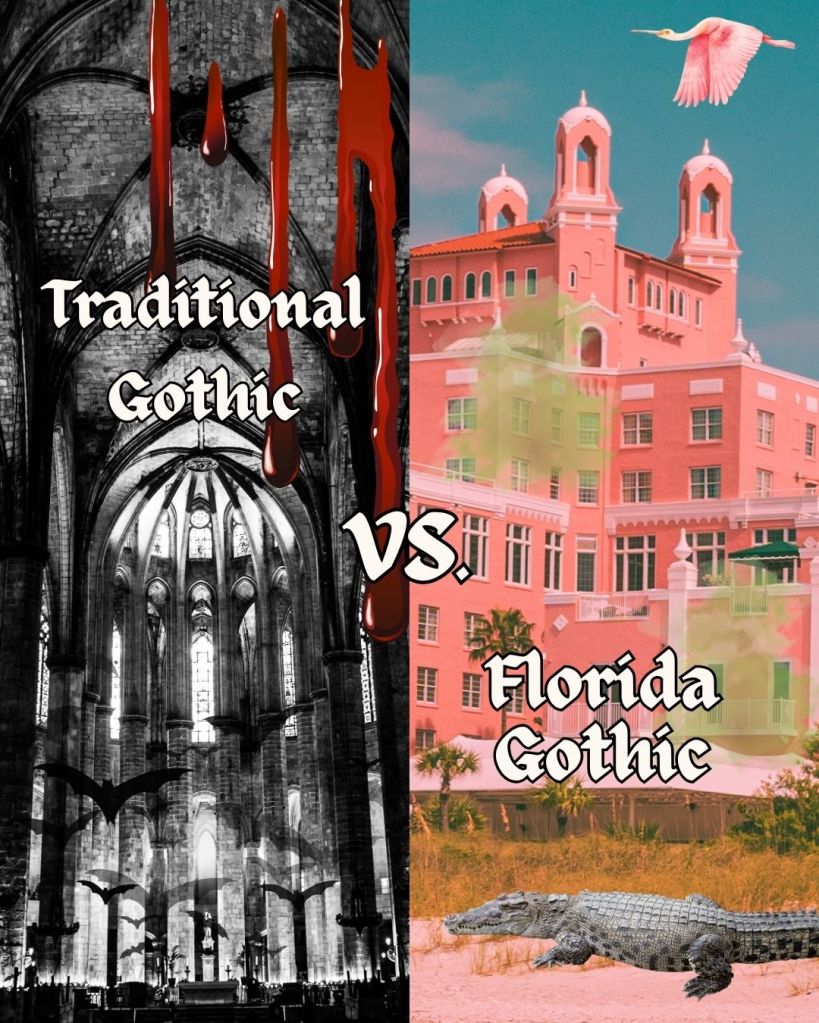
Alligators. Sugar sand beaches. Theme parks. Florida Man.
Ask any non-Floridian what comes to mind when they think about the Sunshine State, and you’ll most likely get an answer similar to those. As for me? Florida is home, and sometimes, home can be a spooky place indeed.
While Florida may be the southernmost state on the lower 48, in many places, it doesn’t really feel like the south. Along the coast and in the lower half of the state there’s a more tropical vibe, though in pockets of central Florida and in the Floribama panhandle and along the Florida Georgia border you get that southern feel. Often, I’m asked what the difference is between Southern Gothic and Florida Gothic, and while the two subgenres are siblings, like Appalachia or the Mississippi Delta, Florida has its own distinct flavor and themes.
The population of Florida is ever-changing, what I like to call the melting pot of the melting pot that is the USA. Residents come and go, and in the more suburban and urban parts of our state, you’ll find people from all corners of the world. Folks who move here without understanding our stormy summers, dry winters, and all of the wonderful and dangerous critters that live right in our own back yards. I like to believe that our unique, blended population is what created Florida Man — a cryptic in his own right — symbolic of everything wild, unexpected, and yes, terrifying that our state can dish out.
Florida blossomed into a sometimes scary place in my mind as a young child obsessed with all things spooky. As a Girlscout, I enjoyed sitting around the campfire at Camp Calusa, listening to my father tell tales about ghost cowboys on horseback and playing Bloody Mary in the banana spider infested camp bathrooms with my friends. Taking haunted hikes through the pine scrub in search of the swamp ape, wading in waist-deep water through Six Mile Cypress slough and hoping that what I bumped into was a cypress knee and not an alligator. Let’s not even talk about the terror of swimming in the Gulf of Mexico, always on the lookout for sharks.
For me, Florida is home, but it’s also a scary place.
When people think of gothic, they often don’t think about beaches or pine scrub swamps. Often they think of castles and misty moors or imposing, stately manor houses. Here, our cathedrals are moss draped old oaks, haunted light houses, and Spanish forts like the Castillo San Marco in St. Augustine. Our ghosts can be found as far south as Key West and in historical hotels like our own local haunt, The Vinoy in St. Petersburg. My friend Josh Ginsberg has a series of haunted Florida books that takes you across the state in search of the most haunted locations, so if you’re looking to find specific real life haunts in your own back yard, I would suggest you start your research there.
As an author, I intentionally and enthusiastically include Florida, its landscape, its creatures, and its people into my work. They say to write what you know, and I know my home state well. I’ve camped in every corner of the state, and swam in the Atlantic, the Gulf, and dozens of blue springs. I’ve boated across great lakes and rivers and hiked through our forests and caves. I even had a Florida panther cross my path once in the middle of the night. I know our trees and our birds, our creatures and histories. But even after living here my entire life, I don’t know everything, so I’m always learning and will always add a little bit of my love for this state into each of my books.
I’ve been told by many readers that Florida almost seems like a character all its own in some of my Florida Gothic books. Setting is so important to me when it comes to creating an immersive narrative experience, and this is something I especially take into consideration when writing my Florida Gothic works. I’m always on the lookout for books that are set in Florida and also use the atmosphere, the sights, and smells of Florida to help create an immersive experience.
Some of my favorites include:
- Florida, Lauren Groff, is an excellent collection of short stories.
- Swamplandia, Karen Russel, a magical realism ghost story about a failing alligator theme park.
- The Reformatory, Tananrive Due, a horrifying ghost tale set in a reform school for boys set in Florida during the Jim Crow era.
- Scumbag Summer, Jillian Luft, set in the Y2K era about a college student living in Orlando.
- The Yearling, Marjorie Kinnans Rawling, a classic about a little girl who adopts a fawn, living a hardscrabble life in a 1940s Florida farming family.
- A Land Remembered, by Patrick D. Smith, about a family of Florida pioneers.
- The Blurry Years, by Eleanor Kriseman, about a girl who moves from one tourist town to the next with her troubled mother.
So what’s the difference between traditional gothic and #floridagothic ? While some may say location, it’s also all about those sun drenched gothic vibes. Not every scary story fits in the gothic realm, and gothic must be written with intent and knowledge of genre elements. I’m currently working on my research for an upcoming Florida Gothic lecture but in the meantime, here’s a quick overview of how these themes play out in my work.
LOCATION: we don’t have castles or moors here in Florida, but we do have plenty of isolated settings and crumbling structures. In my upcoming historic novella FEED THE TREE, you can’t get much more isolation and decay than the swamp.
DUALITY AND CONTRAST: The Picture of Dorian Gray was a huge influence for my body horror novel BED ROT BABY. While I wouldn’t necessarily market BRB as a gothic, elements of Florida Gothic always bubble up in my work. Here we have the contrast between the beautiful and the grotesque, rationality and madness, as well as innocence and corruption.
INTRUSION OF THE PAST: Haunted houses are usually metaphors for trauma’s hidden in the closet or locked in the attics of our mind. Only, in Florida, our haunted houses are usually mid-century ranch style houses instead of stately mansions.
SUPERNATURAL VS PSYCHOLOGICAL: Is that bird really f*cking with you, or are you going mental? Unfortunately there are no ravens here in Florida, but in my novella WHITE IBIS our main character is tormented by a well-known and common tropical bird.
Thank you for diving into my muggy, sun-drenched world!
Rot Girl Horror
Death is the only sure thing promised to us all. While the Grim Reaper isn’t exclusive to Pink Horror and the femme experience, the endless quest to turn back the clock and remain physically youthful is a common ideal imposed on women. Just like with beauty horror, the desire to retain a youthful image and to not “let yourself go” are all facets of Rot Girl Horror.
Rot Girl Horror isn’t just a physical manifestation though, but it’s also a state of mind. The term “bed rotting” — where a person stays in bed all day without engaging in any activities — is directly tied to mental health and burnout. The most effective body horror stories that deal with degradation of the physical self also mirror the degrading mental or emotional state of the protagonist.
In my body horror novella CADAVER BONE, the main character is recovering from knee surgery. She experiences loss of mobility and autonomy due to her injury, and discovers that her fiance isn’t the best caretaker (or partner, for that matter). The body horror in CADAVER BONE also speaks to medical horror and the way that women’s pain and health issues are historically diminished or ignored by medical professionals. The terror in CADAVER BONE comes not just from the breakdown of an important limb, but the social, economical, and personal effects that come from inadequate health care and low self worth.

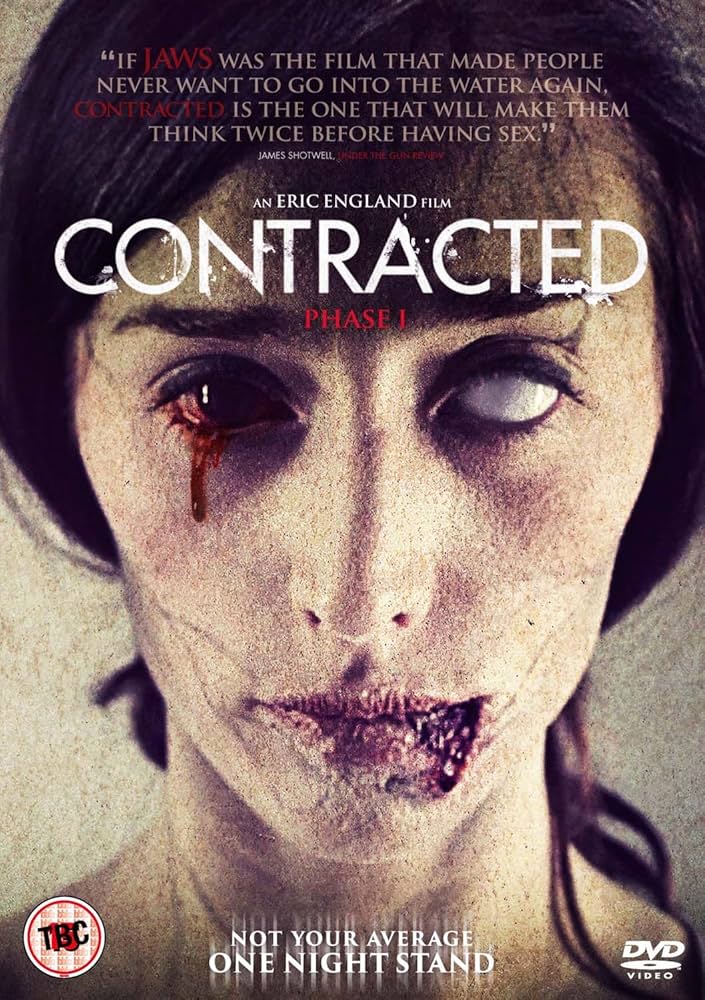
One of my favorite body horror films of all time is CONTRACTED, the story of a woman who is sexually assaulted at a party and contracts a monstrous disease. This to me is the ultimate rot girl tale as we watch the main character live in denial, pushing through her pain as it slowly takes over her life. She denies over and over again the horrible thing that has happened to her, even as her physical pain and symptoms become more and more severe. The anguish of her assault manifests physically in a way that many victims deal with internally; in the case of CONTRACTED, the main character isn’t just falling apart emotionally, but physically as well.
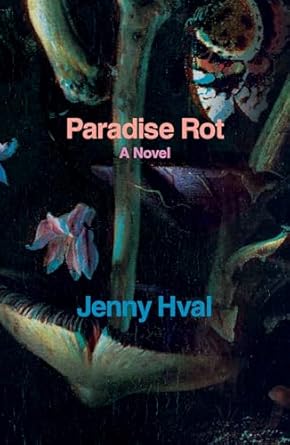
Rot Girl horror can take the form of our external world, affecting the environment and atmosphere as well. In Jenny Hval’s PARADISE ROT, we encounter a sad girl main character who almost romanticizes her rotten environment. The main character in this book is obsessed with her roommate and lives in an apartment over a brewery that is falling apart. Bodily fluids, yeasty aromas and moldy, fruiting bodies in the home mirror the main characters’ crumbling, infested psyche.
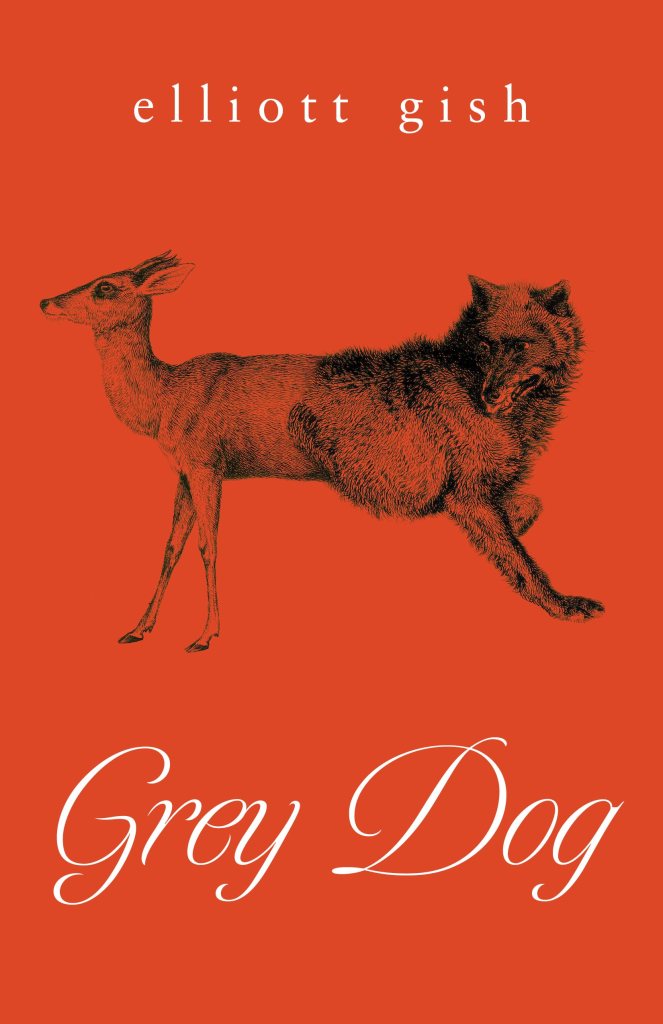
Though Elliot Gish’s GREY DOG can also be slotted under Cottagegore and Gothic Horror, there are some great rot girl themes to be found here as well. In this historical horror novel, the main character goes on an emotional journey to shed her lifelong “good girl” image, embracing her more feral side. As the main character loses her grip on reality, she cares for her physical appearance and hygiene less and less, refusing to wash herself and reveling in the fact that she is becoming physically repulsive to those around her. One passage in particular details the crust in her belly button in such a gross and wonderfully graphic way that I still think about it often.
While we all may have fears that our hair and teeth may fall out, or feel disdain in the way aging features remind us of our mortality, women are always held up to a higher standard when it comes to aging. The misogynistic idea that women lose their value as they age pervades in some circles despite the many waves of feminism working to shut those ideas down. The notion that men with gray hair look distinguished, while women with gray hair look old is not new. It’s no wonder that women fear “letting themselves go” or physically falling apart; society loves to tell us that if we are not young and healthy and physically pleasing, then we have no value.
If you’re looking for more rot girl themed horror, be on the lookout for my novel BED ROT BABY, coming February 2026 from Quill & Crow!
The Horror of Beauty
Lip filler, botox, weight loss drugs, plastic surgery.
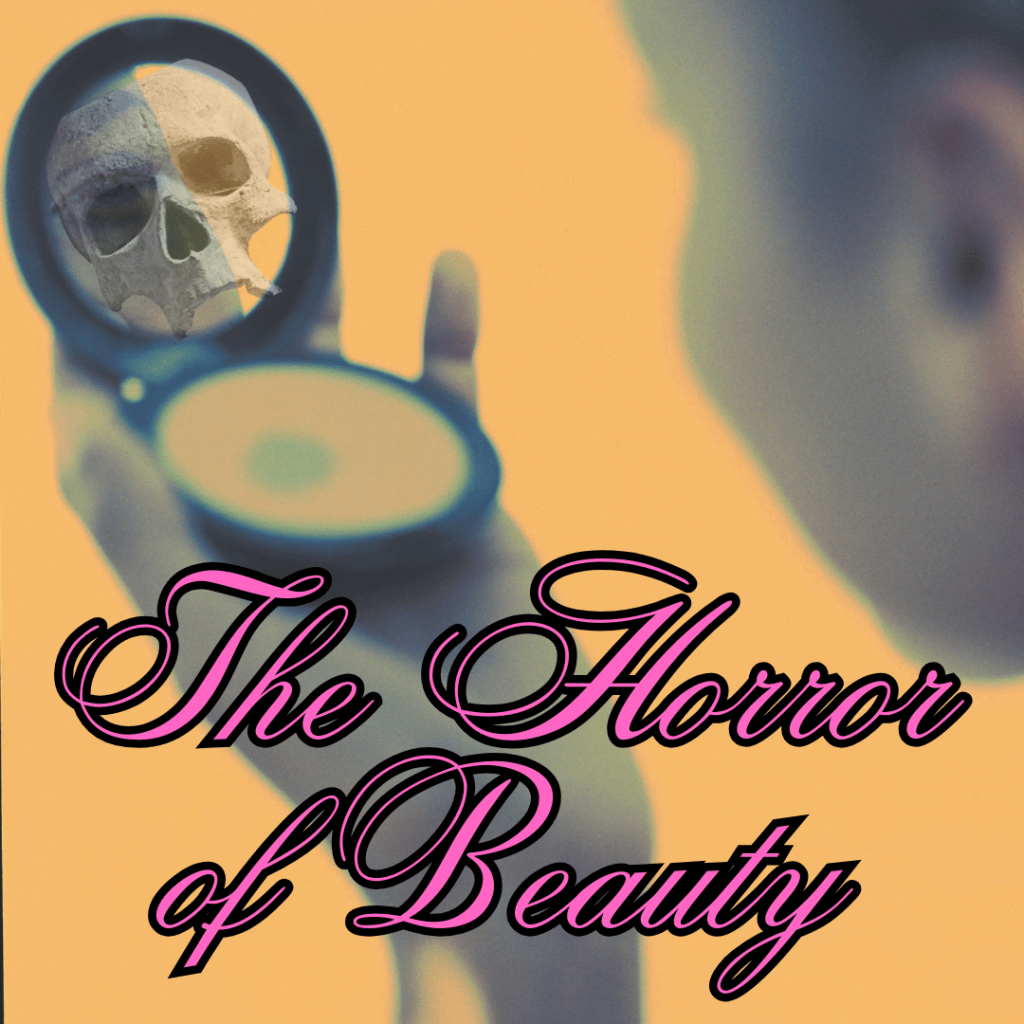
Hi, my name is Wendy and I read and write pink horror, a feminist sub genre of horror and today I want to talk about the horror of beauty. I’d like to preface this essay with a note that I absolutely support anyone who wants to modify the way they look so long as it’s done in a safe, healthy way. This discussion isn’t intended to vilify plastic surgery, makeup or weight loss methods, only to discuss how beauty horror works in the body horror sub-genre.
Beauty horror is a foundational facet of pink horror and an offshoot of the body horror sub-genre. It focuses on the pain, terror, and price that femmes and women often pay in the name of beauty. These modifications can include face lifts, injections, weight loss surgery and more with the horror aspect focusing on the physical and psychological impacts that these procedures may cause.
Painful body modifications are a real world horror that women have endured for millennia across cultures. While some body modifications like piercing and tattooing are now socially accepted among all persons, some of the most extreme and damaging body horrors have historically been imposed upon women. In the past, practices like binding feet and cinch waist corsets were designed to distort women’s features and make them smaller. The result was permanent damage to appendages and damaged internal organs.
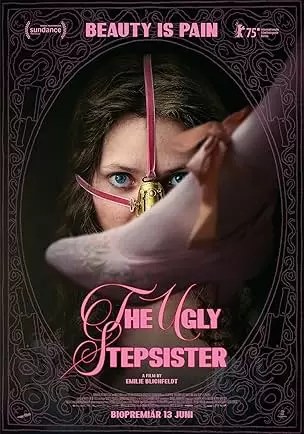
The Austrian horror film THE UGLY STEPSISTER nods to historical cultural norms of doing whatever it takes to fit a woman’s body into a certain mold. The film even touches on early forms of rhinoplasty in a particularly gruesome way. This film truly delivers on extreme body horror in terms of how far women are willing to suffer and even cut away parts of themselves in the name of aesthetics.
Today beauty horrors are perpetuated through similar unrealistic and harmful expectations that manifest in diet culture and the quest for an ever youthful experience. I grew up hearing the phrase “pain is beauty” and while I thankfully had a very supportive family who didn’t instill an unhealthy body image into my little psyche, I know far too many women who were not so lucky.
Last years’ smash hit THE SUBSTANCE was a perfect example of how chasing youth can lead to your downfall. This film touches on the entertainment industry and misogyny and how women feel the need to be able to keep up their looks to continue getting work in a competitive industry. With the use of an injectable substance, the main character is able to regain her youth and continue working, only with monstrous consequences.

When I read and write pink stories, beauty ideals, diet culture and how women often carve away at themselves to please others is always top of mind. Trends come and go, and even now we see that the work of the body positivity movement is crumbling, with societal tastes returning to early 2000s and 1990s youth culture and weight loss trends. While it’s easy to want to blame patriarchal ideals for women pressing themselves to look as thin and youthful as they can for as long as possible, women gladly hold each other to these standards as well. At a recent screening of the new I KNOW WHAT YOU DID LAST SUMMER, the crowd cheered for Freddie Printz Jr. when he came on screen, while the women sitting next to me whispered about Jennifer Love Hewitt’s body. Sometimes in pink horror, competition with other women and the way society has trained us to tear each other down is the real terror.
Check out THE UGLY STEPSISTER, GRAFTED and THE SUBSTANCE for excellent examples of beauty horror in film, and YOUTHJUICE and ROUGE for literary beauty horror.

The Pink Tax in Pink Horror
Today I want to talk a little about how class disparity and poverty plays into the pink horror genre. It occurred to me that most of the characters in my books faced some sort of financial hardship that mirrors the real horror of poverty. Whether from lack of funds or worry about being evicted, those financial hardships were catalysts for the decisions the main character had to make, and mirror real world terrors that the majority of people experience worldwide.
In my reflections I realized that many of my main characters are single mothers, who disproportionately face poverty and financial difficulties. Some other main characters are students or young women struggling to make it in our increasingly expensive world. They have to claw and scrape to make a living in a cold, hard world where there’s little to no support, and are often demonized if they can’t pay up or make ends meet. The desperation women feel to find financial security in a world designed to work against them is mirrored in these stories, as well as the ends they’ll go to in order to feel financially secure.
While poverty and class disparity aren’t experienced only by women, there is no doubt that women are more affected and held down by financial constraints. Though some work has been done to bridge the wage gap between the sexes, women still make .83 to the dollar that men do. I also like to point to the pink tax, or the phenomena where products that are marketed exclusively to women (like pink razors) come with an inflated price tag. The bottom line is that women are paid less for their work and often must pay more simply to live and exist in our world.
One of the best examples of financial horror in the pink horror realm is in Paulette Kennedy’s THE DEVIL AND MRS. DAVENPORT. In this novel, the main character suffers financial abuse (among other abuses) that prevent her from escaping her abuser. As a mid-century housewife, she is unable to open her own checking account without a man co-signing for her, and is unable to save her own money to plan for her freedom. Financial abuse was and continues to be a main factor for why women stay in abusive relationships. It wasn’t until the Equal Credit Opportunity Act of 1974 that women were allowed to have independent bank accounts or lines of credit without a male cosigner. This is one of the main reasons that the tradwife movement (a movement that actively discourages women from having financial independence) is so dangerous, and why it’s important to continue to fight for autonomy for all.
In another essay, I’ll speak on how mental health access also plays into pink horror (which is tied to financial distress). Have you ever watched a horror film or read a horror book with an unhinged or mentally unwell femme main character and said to yourself ‘girl, go get therapy!”? As anyone in the US can tell you, getting access to mental health resources isn’t so easy, especially if you have no insurance or money. Lack of funds/mental health resources is a horror all on its own.
Poverty and class disparity are real world horrors that effect us all, but women and children in particular have always suffered the most.

